In Japan, business emails follow a highly codified structure, and keigo (honorific language) is the norm, even between partners who know each other well. The same phrases come back in message after message, which makes them quick to memorise.
Header and recipient
Start with the company name, the department, then the surname followed by 様 (sama).
| Japanese | Reading | Meaning |
|---|---|---|
| 株式会社サクラ | kabushiki-gaisha Sakura | Sakura Ltd. |
| 営業部 | eigyō-bu | Sales department |
| 田中様 | Tanaka-sama | Mr or Ms Tanaka |
| 各位 | kakui | To all (several recipients) |
Opening phrases
With a regular partner: いつもお世話になっております (itsumo osewa ni natte orimasu), a way of thanking them for the relationship. For a first contact: 初めてご連絡いたします (hajimete go-renraku itashimasu). Then introduce yourself: 〇〇社の〇〇でございます.
The body
State the purpose, then make your request with polite forms: 〜についてご連絡いたしました (I am writing about…), 〜していただけますでしょうか (could you…?), 資料を添付いたします (please find the document attached).
件名:打ち合わせ日程のご相談
株式会社サクラ 営業部 田中様
いつもお世話になっております。株式会社ロンドン・トレードのクラークでございます。
来週の打ち合わせについてご連絡いたしました。火曜日の午前10時、または水曜日の午後3時はいかがでしょうか。
ご検討のほど、よろしくお願いいたします。
クラーク
Closing
The closing is almost always a version of よろしくお願いいたします (yoroshiku onegai itashimasu): ご検討のほど、よろしくお願いいたします when asking them to consider a proposal, 引き続きよろしくお願いいたします for an ongoing collaboration.
Teacher’s tip
First names are not used in Japanese business emails: surname + 様 is enough. And avoid exclamation marks.
Improving with a teacher
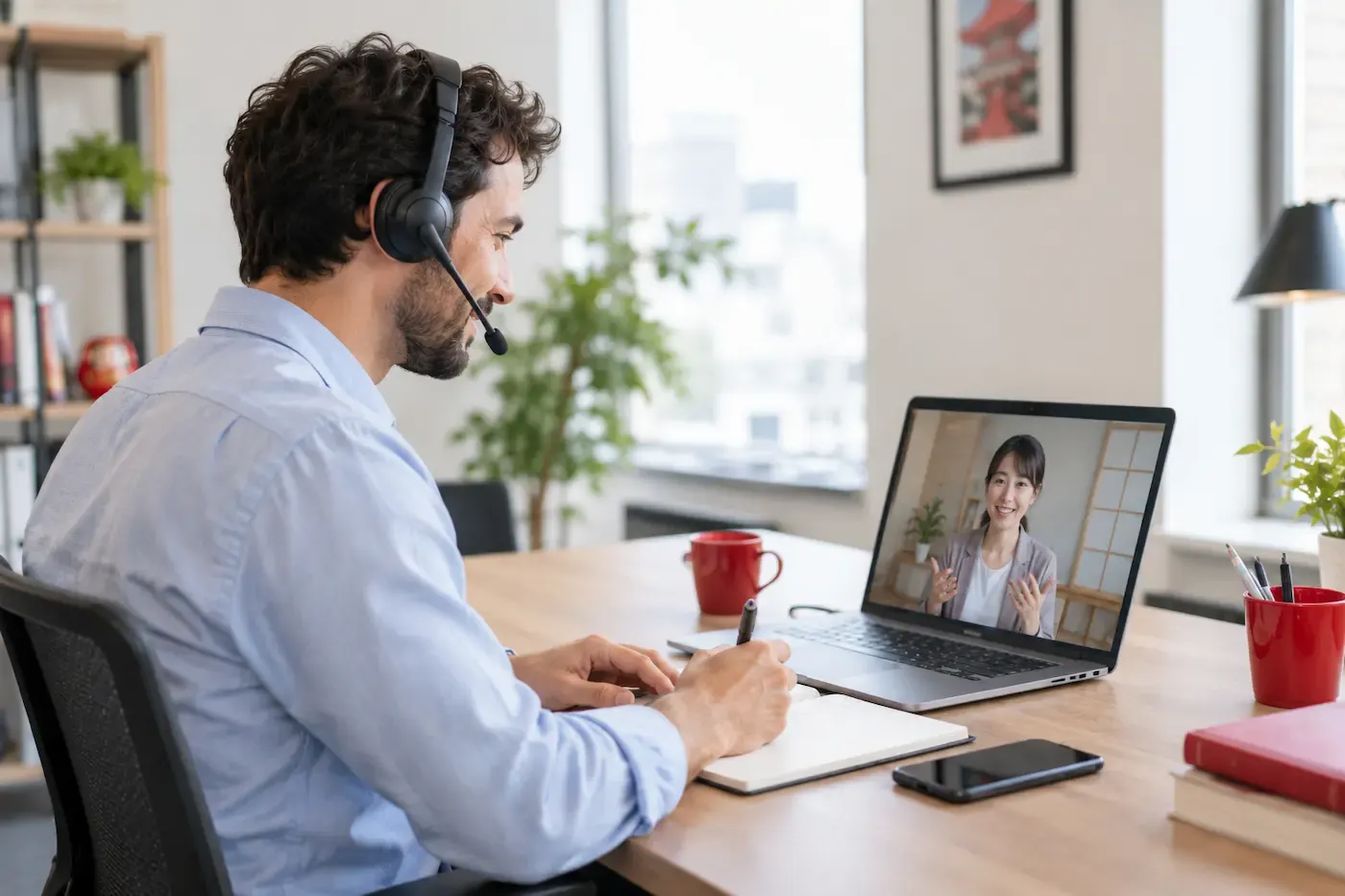
In business Japanese lessons, your teacher corrects your real emails, helps you pick the right level of keigo and prepares the calls and meetings that follow with you.
Ready for your first “konnichiwa”?
Thirty minutes with a Japanese teacher to place your level and decide together what comes next.
Free Trial