Eating out is one of the highlights of a trip to Japan, and a handful of phrases is enough to enjoy it with confidence. Our teachers have their students rehearse them before every trip.
Walking in
Staff welcome you with いらっしゃいませ (irasshaimase), “welcome”. No reply is needed. You will then hear 何名様ですか (nanmei-sama desu ka), “how many people?”: show it with your fingers or say 二人です (futari desu) for two.
Ordering
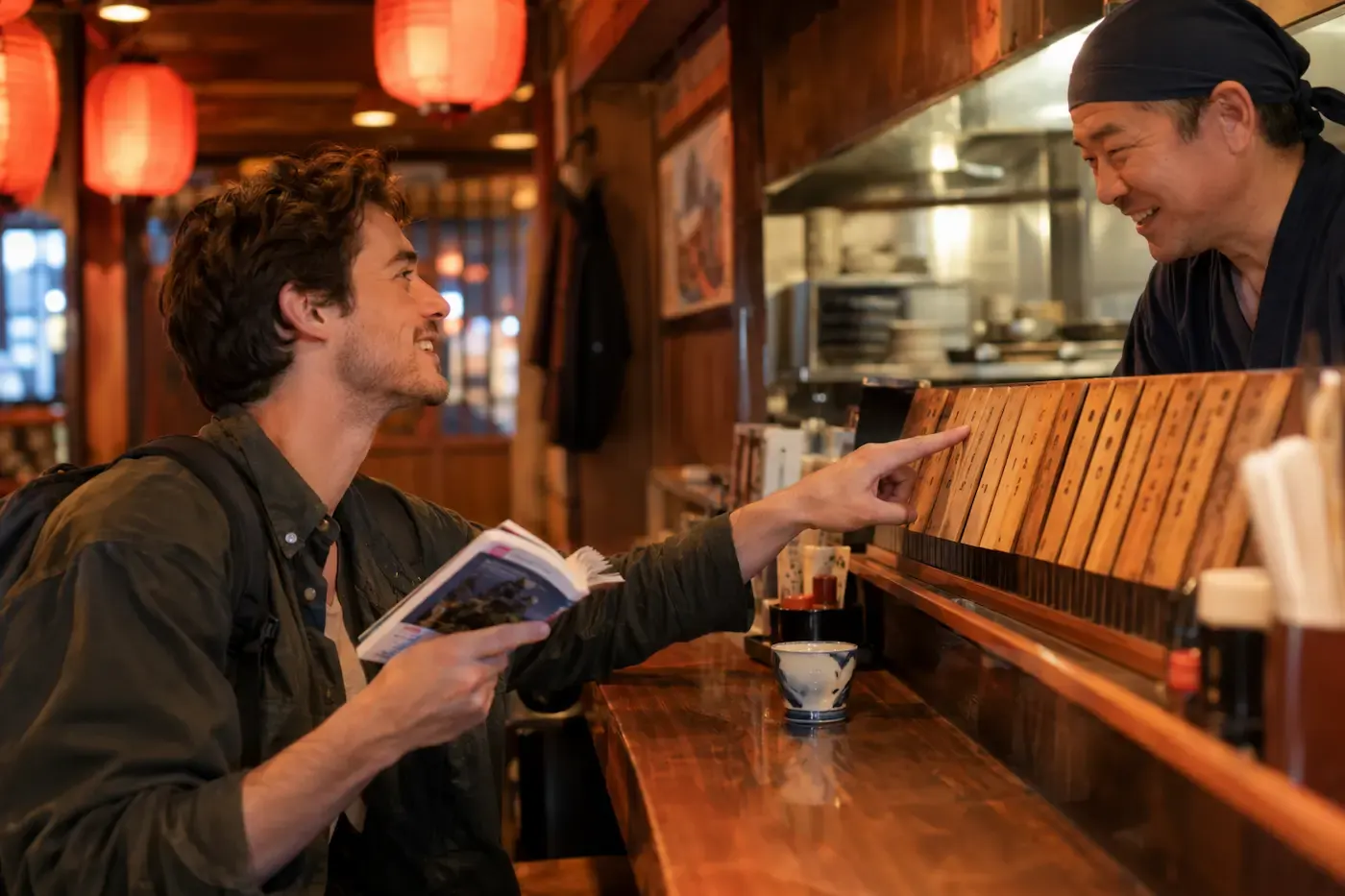
The easiest way: point to a dish on the menu and say これをお願いします (kore o onegai shimasu), “this one, please”. To ask for advice: おすすめは何ですか (osusume wa nan desu ka). In many ramen shops, you order in advance from a ticket machine, the 食券 (shokken).
| Japanese | Reading | Meaning |
|---|---|---|
| メニューをください | menyū o kudasai | The menu, please |
| お水をください | omizu o kudasai | Some water, please |
| おすすめは何ですか | osusume wa nan desu ka | What do you recommend? |
| これをお願いします | kore o onegai shimasu | I’ll have this |
| お会計をお願いします | okaikei o onegai shimasu | The bill, please |
At the table
Before eating, say いただきます (itadakimasu); when you finish, ごちそうさまでした (gochisōsama deshita) to say thanks. The hot towel you are given, the おしぼり (oshibori), is for your hands, not your face.
Paying
Ask お会計をお願いします (okaikei o onegai shimasu). In many places you pay at the till by the exit rather than at the table. And there is no need to tip: it is not customary in Japan.
Teacher’s tip
On your way out, a simple ごちそうさまでした to the staff always goes down well: it is the most natural way to thank them for the meal.
Rehearsing before your trip
These phrases are quick to learn through role play. In class, your teacher plays the waiter and has you order, from the greeting to the bill.
Ready for your first “konnichiwa”?
Thirty minutes with a Japanese teacher to place your level and decide together what comes next.
Free Trial